The short answer
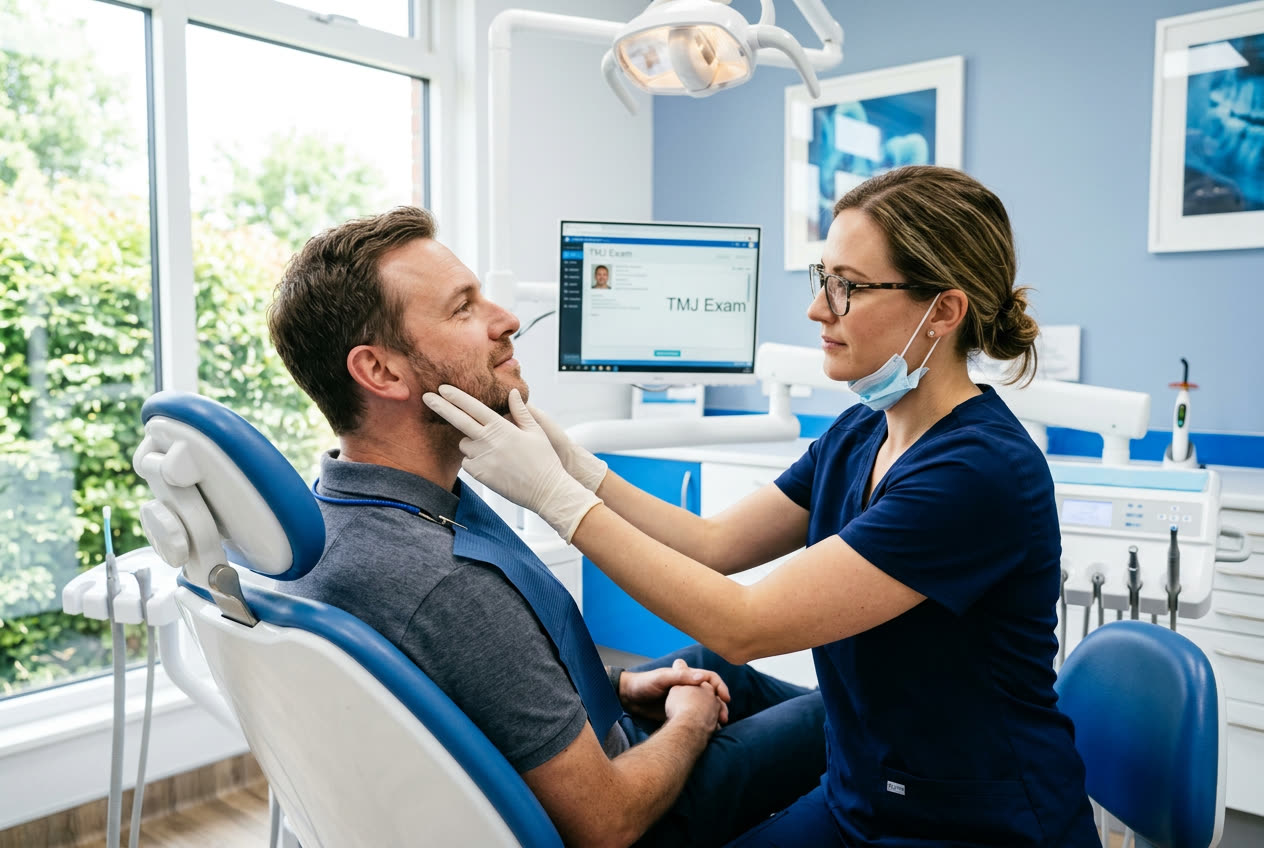
TMJ disorder (TMD) affects the jaw joints and chewing muscles, causing jaw pain, clicking, headaches, earaches or limited opening. Dr. Lina Shahinyan at Pacific Dental Group has additional training in frontline TMJ and facial pain management and uses conservative care — custom splints, bite evaluation, exercises and habit coaching — before considering more involved treatment.
- Common signs
- Clicking, jaw pain, headaches
- Approach
- Conservative first
- Tools
- Custom splints, bite analysis
- Training
- Frontline TMJ & facial pain
Who tmj & facial pain is right for
- Jaw clicking, popping or locking
- Morning jaw soreness or headaches
- Ear pain with no ear infection
- Clenching from stress
What to expect, step by step
Listen
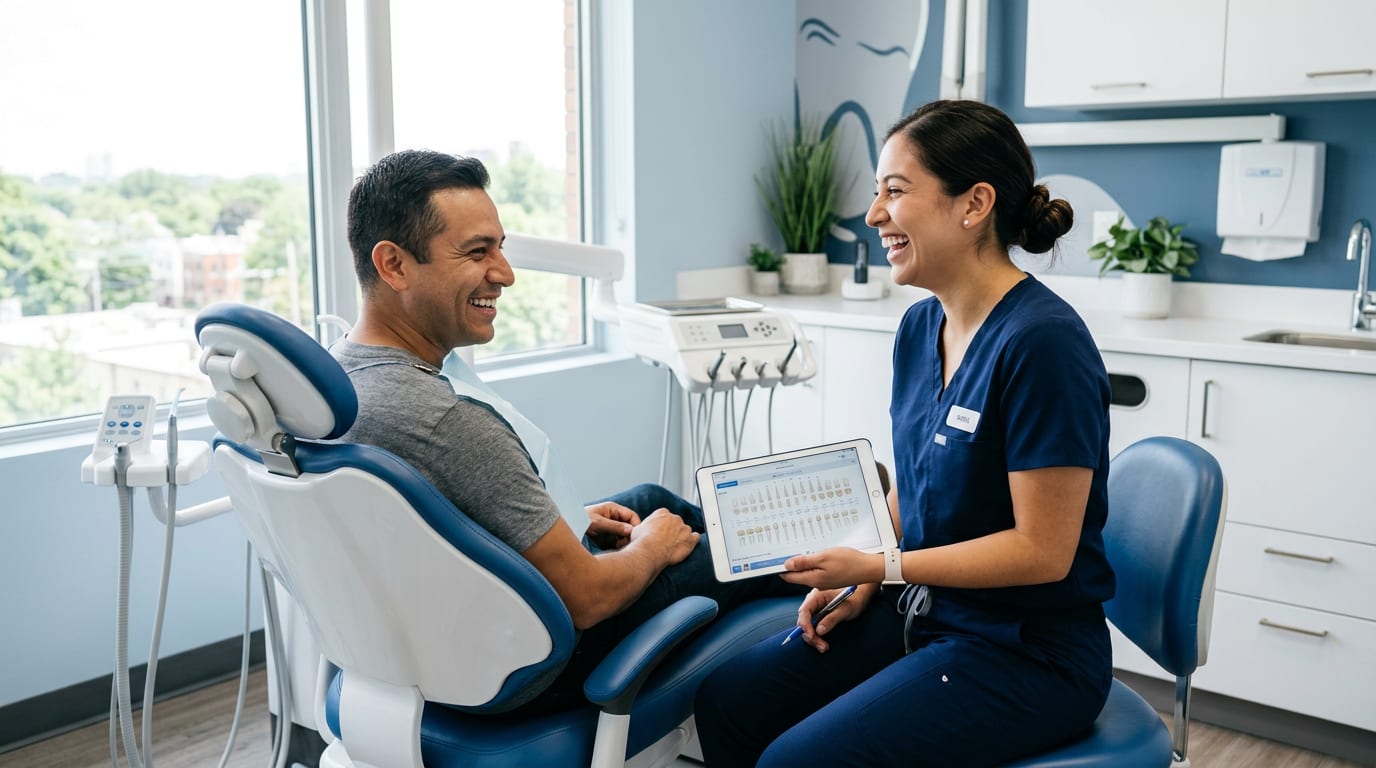
We review your symptoms, stress, sleep and health history.
Examine
Joint sounds, range of motion, muscles and bite are evaluated.
Calm
Splints, exercises and habit changes reduce strain.
Refine
We adjust care and refer to specialists when helpful.
What causes TMJ pain?
TMD often has several contributing factors: clenching and grinding, stress, posture, bite imbalances, arthritis or injury. Because Dr. Shahinyan views the body as an interconnected system, she looks beyond the teeth to sleep, posture and stress.
What can I do at home for jaw pain?
Eat softer foods, avoid gum, apply moist heat or ice, keep your teeth apart when resting (“lips together, teeth apart”) and avoid wide yawns. If pain persists more than a couple of weeks, schedule an evaluation.
TMJ & Facial Pain cost in Montebello
Some medical or dental plans cover TMJ evaluation and splints. We quote care in advance and offer financing for qualifying patients.
Most major PPO plans and Denti-Cal accepted. Cash and card patients welcome, with financing for qualifying patients. See insurance & financing.
TMJ & Facial Pain FAQs
Is jaw clicking a problem?
Clicking without pain is common and often harmless. Clicking with pain, locking or limited opening should be evaluated.
Can a night guard help TMJ?
A properly designed splint can reduce muscle strain and protect teeth. Store-bought guards can sometimes make symptoms worse.
Can TMJ cause headaches and ear pain?
Yes. Jaw muscles and joints are near the ear and temples, so TMD often causes referred pain there.
Will I need surgery for TMJ?
Rarely. Most patients improve with conservative, reversible treatments.
Medically reviewed by Dr. Lina Shahinyan, DDS, MS· Source: NIDCR — TMD